
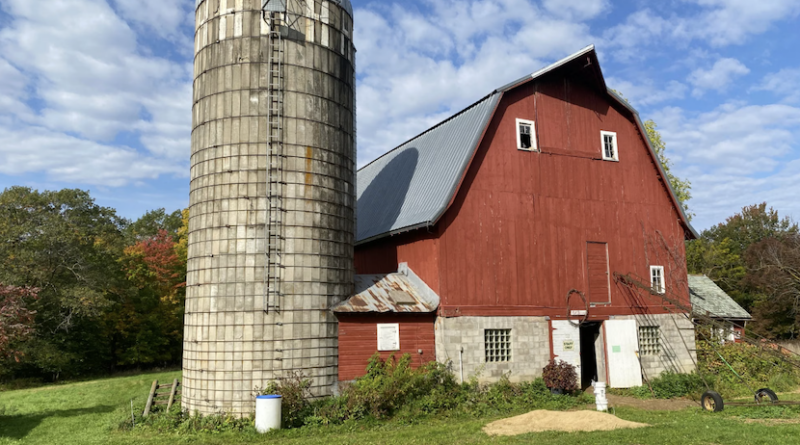
It is a well-documented medical quirk that rural children who spend their early years around livestock rarely develop conditions like asthma, atopic eczema, or hay fever. Since 1989, scientists have attributed this immunity to the “hygiene hypothesis.” The premise is simple: as Western, industrialized environments become increasingly sanitized, children’s immune systems suffer from understimulation. Lacking exposure to everyday microbes, their natural defenses malfunction, triggering exaggerated, self-destructive inflammatory responses.
Until now, the hygiene hypothesis was largely supported by correlational observations rather than hard biological proof. However, an international research initiative led by Professor Markus Ege—representing the Dr. von Hauner Children’s Hospital at LMU University Hospital and Helmholtz Munich—has completely cracked the code.
Published in the journal NEJM Evidence, their new findings map out the exact molecular journey from the inside of a cow to the human airway, definitively proving how barnyard environments shield kids from allergic diseases.
The Massive Microbial Investigation
To move beyond mere guesswork, the team needed to find the specific microscopic agents doing the heavy lifting. They launched a massive data analysis involving over 1,000 boys and girls living in rural European regions.
To gather a unique biological inventory and trace the microbes, the researchers collected nasal swabs and samples of mattress dust from every single participant. They also harvested airborne dust directly from the cowsheds of 47 children who specifically lived on active farms. Using these samples, the team deployed advanced bioinformatics, genetic profiling, and metabolic modeling to determine which microscopic fungi and bacteria correlated with asthma prevention, while also investigating whether a child’s baseline genetics altered the outcome. Finally, to ensure their groundbreaking results were universally applicable, they cross-referenced and validated their data using independent cohorts from Finland and France.
Unmasking the Invisible Protectors
Through a rigorous process of elimination led by bioinformatician and first author Giulia Pagani, the team isolated the exact heroes of the “farm effect.”
The researchers discovered that the biological chain reaction begins deep within the digestive tracts of cattle. Two specific Gram-positive bacteria—Romboutsia timonensis and Glutamicibacter arilaitensis—live in the bovine gut and generate a distinct cocktail of metabolic byproducts, including xanthine, kynurenine, stearidonic acid, and alpha-linolenic acid.
These specific compounds become suspended in the barn air and are subsequently inhaled by children. Once inside the respiratory tract, these easily absorbed chemicals seek out and bind directly to two specific receptors on human airway cells, known as PPARγ and AhR.
Prior to this study, no one knew these receptors played a role in the farm effect. Once activated by the bacterial byproducts, they act as an immunological emergency brake, successfully halting the runaway inflammatory responses that cause asthma and allergies.
A Future Without Asthma?
The sheer potency of these microbes is staggering. The research data revealed that this tiny handful of bacteria is single-handedly responsible for half of the protective effects against atopic eczema and hay fever, and a massive two-thirds of the total protection against childhood asthma.
By successfully charting this complete biological pathway, scientists have opened an incredible new door for preventative medicine. Laboratory researchers now possess the exact blueprint needed to develop revolutionary drugs that perfectly mimic this natural microbial exposure. In the near future, pediatricians might be able to offer the profound immune-training benefits of a rural agricultural upbringing in the form of a simple treatment, completely removing the need for a child to ever step foot in a barn.
Source: NEJM Evidence | July 28, 2026